
303 and CoreData launch new Voice of WA report for brands, business and government
Western Australians are surviving rather than thriving, feel stressed about money and have an increasing sense of isolation – but the majority are still proud of their state and community, according to a new landmark study.
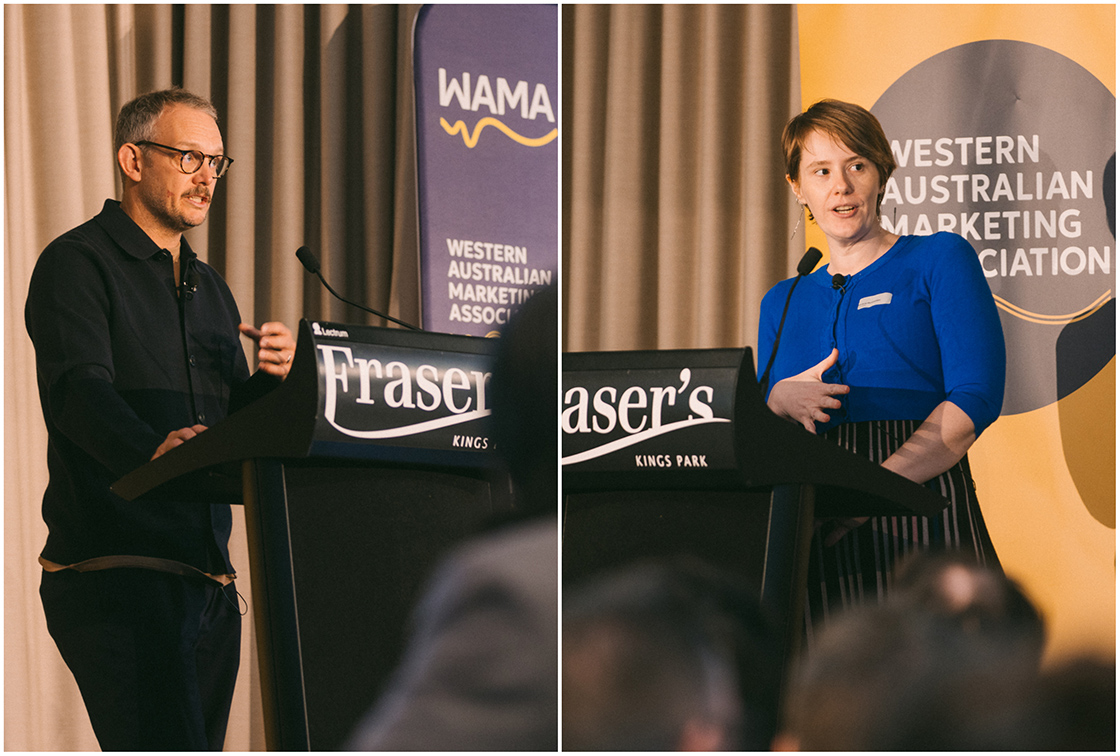
Launched this week, and unvieled at Wednesday’s WAMA brekky, the inaugural ‘Voice of WA’ report developed by integrated agency 303 and research consultancy CoreData WA uncovers the attitudes and emotional drivers of Western Australians, across four core pillars: finance, wellbeing, social connection, and cultural beliefs and aspirations.
And the startling results uncovered by the research have “broad implications for any business, brand, marketer or government interested in engaging audiences across Western Australia’s diverse demographics,” said 303 Perth Chief Strategy Officer Matt Oakley.
“Given the size of our State, and the increasingly complex social and economic environment we are all operating within, it’s no surprise that the needs and aspirations of Western Australians are vastly different to those within other areas of Australia. And yet, there was very little WA-specific data available to those of us aiming to engage with these incredibly different audiences, whether through marketing strategies, advertising campaigns, public policy or business blueprints.
“That’s why we’ve launched the Voice of WA – to accurately capture and track the emotional and attitudinal landscape of life in Western Australia, and in turn support decision makers to better understand the unique perspectives of Western Australians. We hope this will allow us to all develop impactful strategies that genuinely resonate with the people that live here.”
Key findings from the report include:
Finance
• The majority of Western Australians are concerned about money:
– 62% worry about having enough disposable income for non-essentials
– 61% worry about their ability to pay for unexpected expenses
– 57% worry about their ability to pay for rent or mortgage
– 53% don’t think they can afford to do the things that are important
• However, they will still try to treat themselves, with 22% regularly going to the movies, 35% regularly travelling and 38% regularly dining out
Wellbeing
• 68% of Western Australians are feeling stressed or overwhelmed at least some of the time
• Retirees, those living with a partner and high-income earners ($200K+ household income) are more likely to report stronger wellbeing
• However, there are a number of groups less likely to report strong wellbeing including ‘Queenagers’ (women aged 45-65), younger Western Australians (Gen Z and Gen Y), single parents and low -income earners
Social Connection
• While most Western Australians feel they have strong inner circles, 56% don’t feel part of a broader community
• 48% are dissatisfied with social connection and friendliness in WA’s local communities, with 38% not taking part in community activities at all (such as markets, festivals, fitness classes or group sports, concerts, parenting groups, volunteering)
• 50% spend at least as much time socialising online as in person
• Younger Western Australians, who report spending more time socialising online, appear to be feeling more stressed and the least satisfied with their connection to community.
Cultural Beliefs and Aspirations
• Despite feeling stressed, 76% of those surveyed are proud to call themselves Western Australian
• However, this pride rises and falls with age; Baby Boomers (83%) and Pre-Boomers (95%) are the most likely to be proud. Gen Z are the least proud (68%)
• 64% think Western Australians are generous, and willing to help those in need
• 51% made charitable donations in the last 12 months
Oakley added: “Marketers operating in a fast-moving environment often have to rely on a combination of their intuition and available intelligence. The challenge is, when secondary data speaks to a broader audience cohort – i.e. not specific to Western Australians – it can often result in marketing efforts starting in the wrong place. With pressures to be more effective and more efficient, this doesn’t set them up for success. The Voice of WA (VOWA) provides a more robust understanding of local market nuance to start from the right place”
“Market research is a critical part of any marketer’s toolkit. But with pressures on budgets and demand to ‘do more with less’, it can either be neglected or ignored altogether. VOWA will hopefully provide Western Australian organisations with insights that not only shape their marketing and communication efforts, but also inform new product development and innovation”.
CoreData WA’s founding director, Kristen Turnbull, concluded: “The findings show that many Western Australians are just getting by and that stress and anxiety is impacting our wellbeing. While this is somewhat ironic for a state with a powerhouse economy, it’s not surprising given the affordability crisis we’re experiencing in WA and ongoing global uncertainty.
“Despite the sombre mood, there’s strong consensus that we’re a resilient, generous and proud State and the majority remain optimistic about their own future.
“We’re looking forward to seeing how the data changes as different strategies are implemented and we continue to track community sentiment and wellbeing over time.”
The Voice of WA report can be accessed here.
About the Voice of WA (VOWA):
The findings presented in the VOWA report are based on a quantitative survey of 1,002 West Australian residents aged 18 and over, with sample sourced via panel partner Pure Profile. The sample is representative of the WA population by age, gender and location, with 801 respondents from the Perth metropolitan area and 201 from regional WA. The fieldwork was conducted between 14 and 30 October, 2025.