81% of young Aussies aren’t connecting with traditional ads – says inaugural ‘I Hate Ads Report’ from YouthInsight + We Are Different
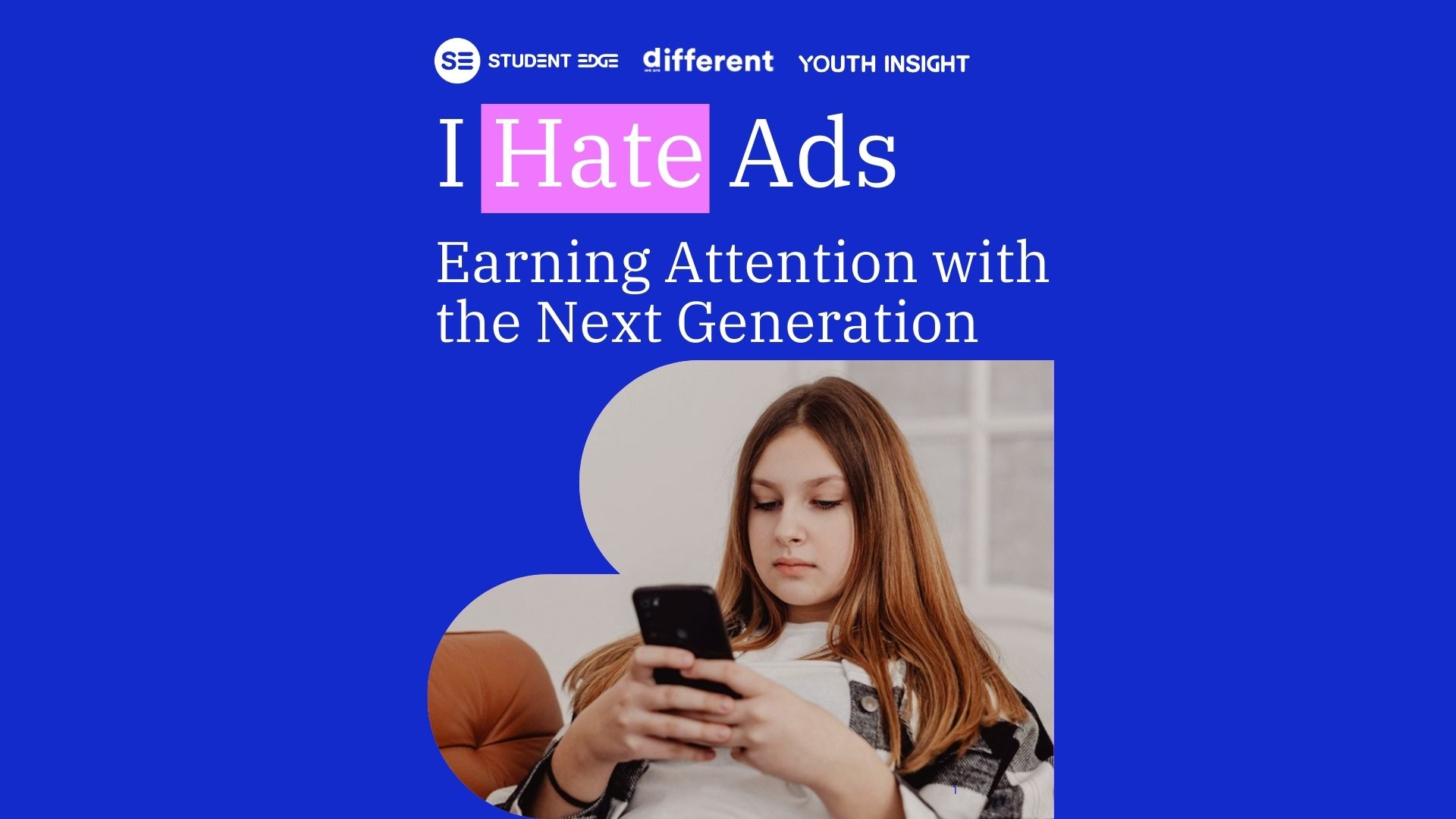
An in-depth study polling 1,000 Australians aged 14 to 29 with commentary from Gen Z creators and youth experts has revealed a shocking finding – 81% of young people hate ads. The inaugural I Hate Ads Report, released by leading youth research agency, YouthInsight, and earned-first creative agency, We Are Different, unpacks what drives trust and purchase intent with the next generation of consumers – helping shine a light on how young people evaluate brand storytelling, creator credibility and authenticity in today’s attention economy.
The report asks, do young people hate ads? The answer – mostly yes, but not for the reasons many brands assume.
The I Hate Ads Report reveals four clear themes shaping how young people interpret, engage with and respond to brand messaging in a world where those messages are everywhere and always on:
1. Gen Z hate (a certain type) of ad
Gen Z’s world is defined by constant exposure to content, yet exposure does not equal connection. 81% say they hate ads and 60% find them intrusive. What’s interesting is that only 28% of young people want fewer ads overall – so it’s not the presence of branded content that’s leading to hate, rather the type of content they’re being served.
2. Brand love requires some polish remover
Young people are rejecting brand messaging that feels forced or artificial. Almost half (40%) agree that over-polished ads make them trust a brand less, whereas content that feels authentic (56%), teaches something new (50%) and/or shows the ‘behind the scenes’ of a brand (36%) is enjoyed by Gen Z. By all accounts, brands are entering their authenticity era with many requiring some polish remover to drive brand love.
3. Opinions (still) driven by opinion leaders
When forming opinions about brands, Gen Z rank content creators (41%), influencers (28%) and media outlets (25%) as their most trusted sources. Despite its widespread adoption, AI chatbots / LLMs rank relatively low (13%) on perceived trust. The numbers shift slightly when looking at influence over purchase intent with media outlets (35%), AI (26%) and influencers (14%) driving intent in that order. With constant exposure to content, the data shows Gen Z is leaning on trusted sources to help shape both opinions and purchase intent.
4. Show me the money (then the information, then the creative)
Cost of living is impacting Gen Z’s expectations from brands with almost half (45%) saying they want more discounts in the future. Beyond the financial, Gen Z want more useful information (33%), more creative content (34%) and more funny content (30%). To drive more love, brands should remain cost-conscious while offering content that informs, entertains and inspires.
Dr Hande Akman, Research Director at YouthInsight, says the findings offer a wake-up call to advertisers: “There’s a clear disconnect between traditional brand marketing and the cultural cues young audiences value today. The research shows high exposure isn’t translating to engagement, trust or action. A desire for more authenticity, less polish, and content from trusted voices shows young people want to feel more respected and engaged, opposed to simply being broadcasted to.”
We Are Different Founder and Director, Stuart Terry, says the industry must rethink how it earns attention: “Cultural fluency and earned attention are non-negotiables for brands trying to reach the next generation. Marketers have an opportunity to embrace a more authentic, unpolished and engaging style of storytelling. That means shifting marketing dollars toward strategies that build trust and engagement. Earned attention isn’t a tactic anymore, it’s business critical. The emphasis on trusted sources to help shape both opinions and purchase intent should send a clear message to brands.”
The I Hate Ads Report marks a significant collaboration between YouthInsight and We Are Different, bringing together deep quantitative insight, cultural analysis and frontline creator perspectives to help the industry better understand how the next generation sees, evaluates and responds to brand communication.
As Gen Z’s cultural and economic influence accelerates, the report helps communication and marketing executives navigate a rapidly evolving attention landscape. The findings encourage brands to rethink long-held assumptions about advertising effectiveness, elevate authenticity as a strategic priority, and redesign the way they show up for a generation that demands more from the brands they let into their world.
The I Hate Ads Report is just the beginning of a broader conversation about what meaningful, culturally connected communication looks like in 2026 and beyond.
The full report can be downloaded here.
Register for FREE HERE and receive the Campaign Brief WA Daily Bulletin and/or the global Best Ads Best of the Week Bulletin.
1 Comment
With this ‘inaugural report’ and the accompanying ‘article’/branded content, We Are Different have provided a brilliant demonstration of their skills in doing ads that don’t look like ads. Bravo.